Virtana Platform architecture
Virtana provides the deepest and broadest observability platform. The following diagram illustrates Virtana as a comprehensive, AI-powered platform that collects data from across all your infrastructure, analyzes it, and automates operations to deliver better performance, reliability, and business insights.
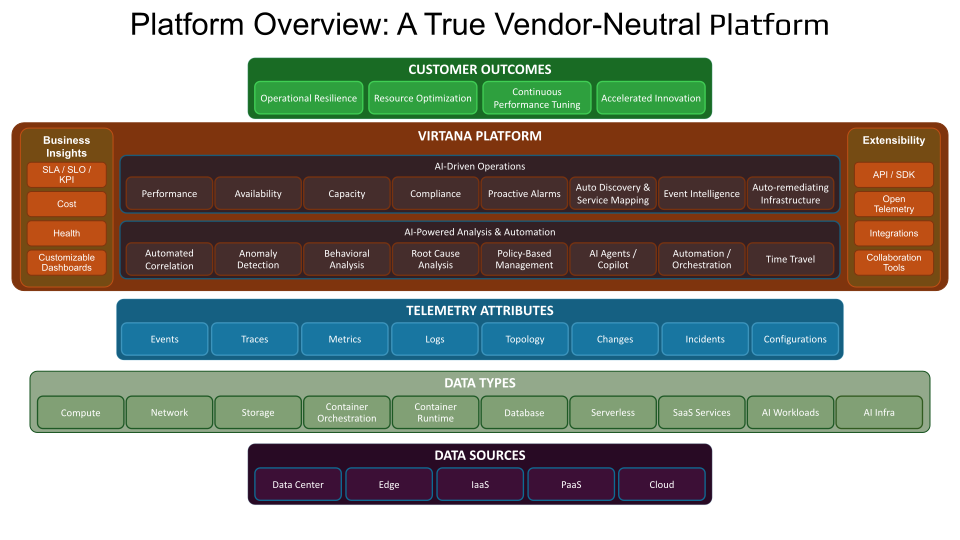
Let's take a closer look at the platform how the platform components work together.
Architecture
The platform architecture is designed to provide comprehensive monitoring and management of various workloads, ensuring optimal performance and resource utilization. It encompasses the following key components:
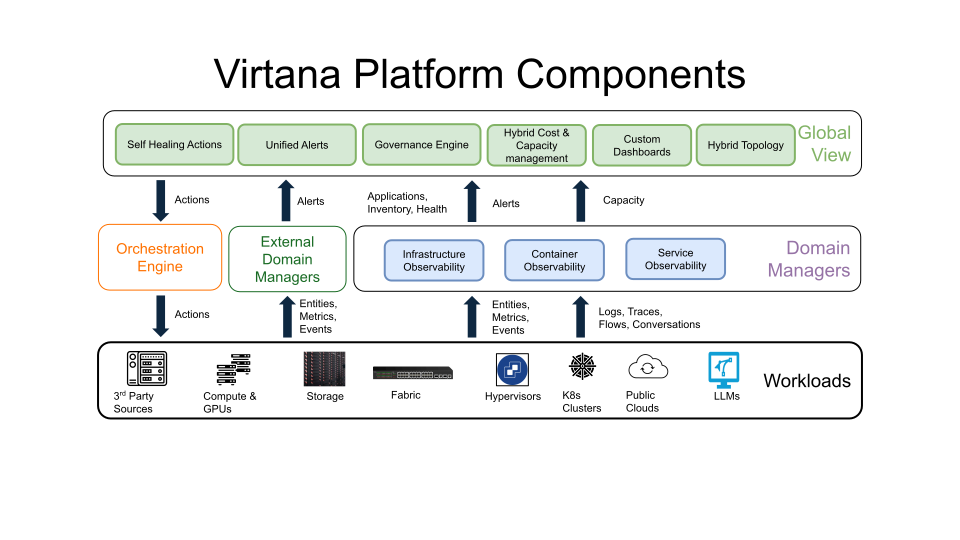
Workloads: This includes Compute, GPUS, Networks, Storage, Hypervisors, Containers, HCIs, Large Language Models (LLMs), and Public Clouds. These managers are responsible for monitoring and collecting data on entities, metrics, events, logs, and traces, generating alerts to ensure optimal workload management.
Data Flow: Workloads send entities, logs, and metrics to domain managers. These domain managers can be internal, such as Virtana Infrastructure Observability, Container Observability, Service Observability, or external.
Alert Management: Domain managers send alerts to the Global View module, ensuring a consolidated view of all critical events across the infrastructure.
Capacity Management: Data related to capacity is sent to the Global View module, providing insights into resource utilization and helping with planning and budgeting.
Workflow:
Data Collection
Workloads: The platform supports various workloads, including Compute, GPUs, Networks, Storage, Hypervisors, HCIs, Containers, and LLMs.
Data Types: Each workload generates different types of data, such as entities, metrics, events, logs, and traces.
Data Ingestion
Internal Domain Managers: Container Observability and Infrastructure Observability
External Domain Managers: Third-party systems and tools integrated with the platform.
Data Processing
Entity Management: Domain managers process the data to monitor entities and generate alerts based on predefined rules and policies.
Metrics and Events: Collected metrics and events are analyzed for performance monitoring and anomaly detection.
Data Distribution
Global View: Alerts from both internal and external sources are sent to the Global View module, offering a unified and consolidated view across the entire platform. Metrics and capacity-related data are sent to the Global View module to track and manage costs associated with different workloads
Data Flow and Management
Alerts: Alerts are flowing from both internal and external sources.
Metrics and Entities: Sourced from internal systems, offering critical performance and usage data.
Logs, Traces, and Flows: These are maintained in individual domain managers, but can be accessed easily from a global view in their respective user interfaces.
This workflow ensures a streamlined and efficient process for monitoring, managing, and optimizing infrastructure performance, leveraging a combination of internal and external data sources, and providing comprehensive visibility and control through the Global View module.